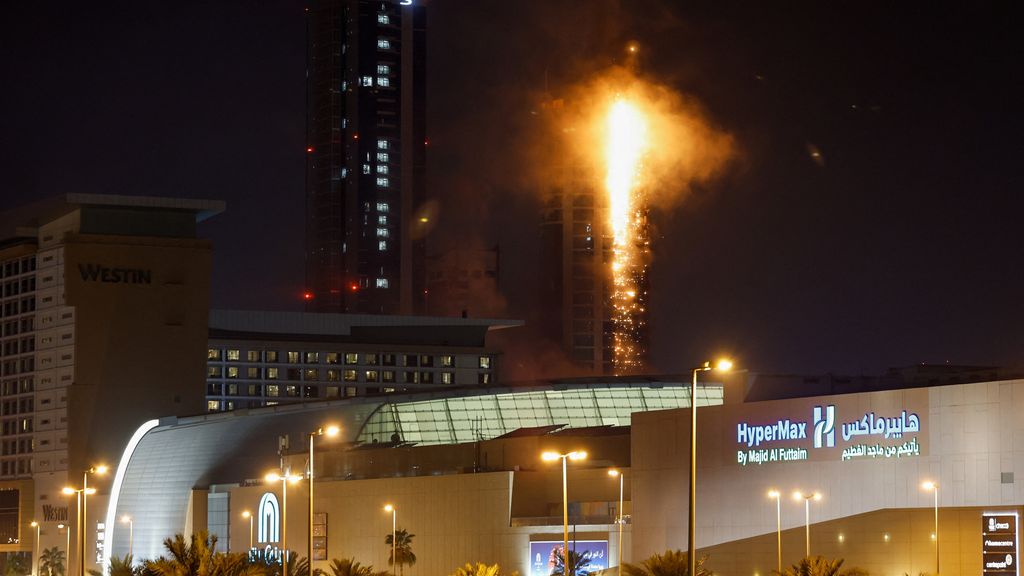
Kuwait's Role in Iran's Retaliation: New Details Emerge Amidst Regional Turmoil
The recent wave of retaliatory strikes by Iran across the Middle East has sent shockwaves throughout the international community, profoundly altering the regional security landscape. While much attention has been focused on targets in Israel and the United Arab Emirates, new details reveal the significant and often overlooked impact on Kuwait, a nation strategically positioned at the crossroads of these escalating tensions. The tragic events unfolding, including a direct
Kuwait Hit by Iranian Missiles: Casualties Reported and a confirmed missile strike on a US military installation, underscore the perilous tightrope Kuwait walks amidst geopolitical rivalries. This article delves into the specifics of Kuwait's involvement, analyzing the broader implications of these unprecedented attacks.
The Unfolding Crisis: Iran's Retaliatory Strikes Across the Gulf
The night of Saturday into Sunday marked a dramatic escalation, with Iran launching a barrage of missiles and drones in what it described as retaliatory attacks. The intensity and breadth of these strikes were staggering, targeting multiple nations across the Gulf region and beyond. Initial reports quickly highlighted the devastation in Israel, where a woman tragically lost her life in Tel Aviv following an Iranian rocket impact. The central Israeli city of Beit Shemesh experienced a devastating missile attack on an apartment complex, resulting in eight fatalities.
The United Arab Emirates, a significant regional player, also bore the brunt of these assaults. In Abu Dhabi, the capital, three lives were lost due to Iranian missile strikes. The UAE Ministry of Defense reported an astonishing scale of aggression, with Iran launching 165 missiles and 541 drones towards the Emirates since Saturday. Despite robust air defense systems, 35 drones managed to penetrate, causing two injuries in Dubai from debris of intercepted projectiles.
Beyond these primary targets, other nations in the region, including Qatar, Bahrain, Saudi Arabia, Jordan, and Oman, also reported attacks or heightened alerts, painting a grim picture of widespread instability. This broad geographical scope clearly signaled Iran's intent to project power and retaliate across a wide spectrum of adversaries and perceived facilitators of aggression against its interests.
Kuwait Under Fire: Casualties and Direct Impact
Amidst the sweeping regional attacks, Kuwait, a nation typically known for its diplomatic efforts and stable oil production, found itself directly in the line of fire. The repercussions were immediate and tragic. On Sunday, the nation reported one fatality and 32 injuries as a direct result of these Iranian attacks. While the specific targets within Kuwait are still being fully assessed, the presence of civilian casualties points to the indiscriminate nature of some of these strikes, significantly elevating concerns for the safety and security of its populace.
The incident marks a stark reminder of the vulnerability of even non-belligerent nations when regional conflicts spiral out of control. For a country like Kuwait, which has historically maintained a delicate balance in its foreign relations, being drawn into such a direct confrontation presents considerable challenges. The local populace, accustomed to relative peace, now faces the harrowing reality of missile threats, prompting urgent reassessments of national defense strategies and emergency preparedness. The phrase "koeweit raket aanval," widely discussed in regional media and among search queries, encapsulates the sudden and brutal reality that descended upon the country.
A New Front: The US Military Presence and Direct Strikes
Further compounding the complexity of Kuwait's situation was the explicit confirmation by a spokesperson for the Kuwaiti Ministry of Defense regarding a
Iranian Missile Strike Confirmed on US Base in Kuwait. This development is particularly significant, highlighting not only Iran's willingness to target facilities housing international forces but also the heightened risk for US personnel stationed in the region.
Kuwait hosts several vital US military installations, playing a crucial role in Washington's strategic presence in the Middle East. A direct strike on such a base represents a clear escalation, drawing the US directly into the immediate impact zone of Iran's retaliatory actions. While details regarding casualties or damage at the US base were not immediately clear from the initial reports, the incident underscores the precarious position of US forces in allied nations during periods of intense regional conflict. It also raises questions about the efficacy of existing defense mechanisms and the rules of engagement for foreign troops operating in a rapidly changing threat environment.
Navigating Regional Tensions: Kuwait's Diplomatic Challenges and Security Response
The events have thrust Kuwait into an exceptionally challenging diplomatic and security dilemma. As a nation hosting significant US military assets, it is implicitly aligned with American interests, yet it also shares borders and complex historical ties with Iran and other Gulf states. This dual reality demands a finely tuned diplomatic approach to avoid further entanglement in proxy conflicts.
The chaotic airspace during the intense period of retaliation also led to another critical incident: Kuwaiti forces reportedly shot down three American fighter jets. While the details surrounding this event remain sparse, and the crew thankfully survived, it points to the extreme tension and potential for tragic miscalculation in a crowded and active airspace. Such an incident, even if born of misidentification or defensive protocols during a high alert, underscores the profound dangers when multiple actors operate in a contested environment. It highlights the critical need for seamless communication and de-confliction protocols between allies, especially when air defense systems are primed for hostile intercepts.
For Kuwait, the immediate aftermath involves several key challenges:
- Strengthening Air Defense: Re-evaluating and potentially upgrading its air defense capabilities to protect against future missile and drone threats.
- Ensuring Civilian Safety: Enhancing emergency response systems, public warning protocols, and shelter infrastructure for its population.
- Diplomatic Balancing Act: Intensifying diplomatic efforts to de-escalate regional tensions while reaffirming its alliances and sovereignty.
- Managing Foreign Military Presence: Working closely with the US and other international partners to ensure coordinated defense strategies and clear operational guidelines.
This period requires Kuwait to leverage its historical role as a mediator and its strong international relationships to advocate for restraint and stability. The "koeweit raket aanval" experience is a sobering lesson in the regional contagion of conflict.
Conclusion: The Enduring Impact of a Volatile Region
The recent Iranian retaliatory strikes have undeniably reshaped the security narrative for Kuwait, transforming it from a concerned observer to a directly impacted nation. The casualties suffered and the attack on a US military base underscore the grave risks associated with escalating regional tensions. Kuwait's diplomatic skill and robust security measures will be tested as it navigates this volatile landscape. The dramatic incident involving the downing of US fighter jets by Kuwaiti forces further emphasizes the chaotic and unpredictable nature of conflict in such a densely militarized region. As the dust settles, the international community watches closely to see how Kuwait will adapt to these new realities, striving to maintain its sovereignty and protect its people amidst the enduring challenges of the Middle East. The need for dialogue, de-escalation, and international cooperation has never been more urgent for the stability of the entire Gulf region.